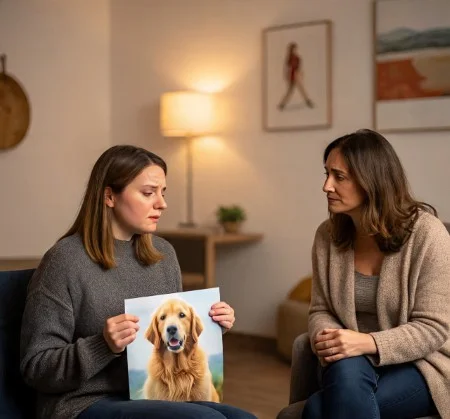
Pet loss therapy in Toronto, North York, and across Ontario, with answers to common questions about grief, guilt, anxiety, and anticipatory grief. Written by Renata Roma, a therapist with a PhD in Child and Youth Studies and over 15 years of research experience in the human–animal bond.
Coping with pet loss can be challenging. As a researcher specializing in the human-animal bond, and a psychotherapist offering therapy and counselling for pet loss and grief in Toronto for children and adults, I see how a pet’s illness, aging, or death can affect many areas of a person’s life.
You may find yourself worrying about changes in your routine, treatment decisions, or changes in your pet’s behaviour. You may also notice yourself watching your dog or cat more closely.
Often, these observations and behaviours come with thoughts about losing your pet. Alongside sadness, there may be guilt, anxiety, exhaustion, and questions that do not have a clear answer.
In my experience providing pet loss counselling in person in Toronto and virtually across Ontario, people seek help in many different circumstances. Some are grieving a pet who has died, while others are navigating a diagnosis, changes associated with aging, or difficult decisions about their pet’s care. Many wonder whether these experiences of losing a dog, a cat, or another pet can be discussed in therapy.
If you are considering counselling for pet loss, you may be wondering what this type of support looks like.
In fact, you do not have to wait until your pet has died to seek specialized support for pet loss in Toronto.
Navigating the uncertainty of illness, the changes that come with aging, and the responsibility of making important decisions about your pet can be difficult and seeking support can have a significant impact in your mental health.
Exploring pet loss in therapy is an area of both deep interest and extensive experience for me, and one of the topics I discuss in my work, including my forthcoming book for psychotherapists, Conversations About Companion Animals in Clinical Settings.
Conversations about the human–animal bond shouldn’t begin only when a pet dies. This relationship holds an important place in many people’s lives, and that’s what I discuss in this interview with CBC.
Below are some common questions about a pet’s illness, pet loss, and how to navigate these experiences of losing a beloved companion animal.
Coping with Pet Loss: Why Does Losing a Pet Hurt So Much?
A pet can be part of the ordinary moments that give your life familiarity: waking up, coming home, talking, taking a walk, or sitting together at the end of the day. Losing them can change both your emotional world and the structure of your days. Our attachment to our pets and its clinical relevance are topics I explore further in this article for Psychology Today.
Some may wonder: “Why am I so sad after losing my dog?” or “How can I cope with the loss of my cat?”
You may miss their companionship, the feeling of being needed, the relationship you shared, and your routines together. Sometimes, the hardest moments involve anticipating the loss. At other times, it is looking at an empty bowl or noticing the quietness of the house without the sound of their paws on the floor.
The loss of a beloved pet can bring sadness, anger, numbness, anxiety, and a variety of other feelings, including guilt.
This does not mean that you will experience all of them or that they will appear in this order. Paying attention to these experiences without comparing yourself with others is one way to navigate grief while accepting that it is a unique experience.
Coping with Pet Loss: Why Am I Grieving When My Pet Is Still Alive?
You may notice that you sometimes begin to imagine your pet’s death even while they are still at home with you. Perhaps your pet has received a diagnosis, or you are dealing with unexpected changes, and thoughts about losing them are becoming more frequent.
This experience is called anticipatory grief, which may arise before an expected loss. When your pet’s health begins to decline, it can bring fear, anxiety, and considerable confusion about why you are feeling this way.
It may be helpful to distinguish between today’s actual needs and what might happen in the future. Arranging a veterinary appointment and sharing the responsibility for decisions can also be important. People often find themselves trying to interpret their pet’s signals and feeling very isolated in the process.
Coping with Pet Loss: Is It My Fault? Why Do I Feel Guilty After Losing My Pet?
Common questions that may arise include:
- Should I have noticed the signs sooner?
- Should I have asked for another opinion?
- Why wasn’t I there when my pet needed me?
After a loss, you may replay appointments, conversations, or your pet’s final days, searching for a moment when something could have gone differently.
One question to explore is: What did I actually know at the time?
Sometimes, when we look back, we idealize the path we did not take and imagine that things could have been different, or that we would feel differently today.
Therapy for pet loss can offer space to explore these feelings, including responsibility, regret, uncertainty, and the expectations you have around this experience. This includes acknowledging anything you wish had been different while considering the circumstances in which you were making decisions.
Does This Mean I Was a Bad Pet Owner?
You may question your entire relationship with your pet because of a particular decision or moment. Perhaps you were away when they died, felt frustrated during a demanding period of care, or could not afford every treatment available.
There may be specific experiences you wish to understand or grieve. It can also help to look beyond those experiences and consider the relationship as a whole: the daily care, companionship, and everything that was part of your history together.
What would you want someone to understand about the circumstances of your relationship? Would you judge someone else who was going through the same situation?
These questions can create space for self-compassion and an honest conversation with yourself.
At the same time, some experience a lack of support and may wonder:
“Why does no one understand my grief after losing my pet?”
Feeling unsupported and misunderstood is, unfortunately, more common than it may seem, and can make the grief of losing a pet even more painful.
Another common question, pet owners may ask is: How Can I Cope with My Pet Getting Older?
As your pet grows older, their needs and abilities may change, and your relationship with them may change too. Activities you once did together may no longer be possible, and adjustments may become necessary.
Losing these activities and ways of spending time together can bring sadness and lead you to think about the end of your pet’s life. Sometimes, stepping back from certain activities is difficult because it means acknowledging that things are changing, and you want to hold on to time as it is. Adapting to new routines can be hard.
Emotionally, it can help to ask: What is still available to us now?
This might mean sitting outside together, offering gentle companionship, or allowing a familiar walk to happen at your pet’s pace.
Concerns about pain, mobility, or other changes can be discussed with your veterinarian. Other family members may also help you think through your pet’s needs and share these conversations.
Coping with Pet Loss: How Do I Manage Anxiety About My Pet’s Health?
When your pet is unwell, it can be difficult to leave home or concentrate. You may find yourself searching online for explanations and answers that might not exist. Living with uncertainty can be very difficult, and you may end up repeatedly checking whether your pet is breathing, eating, or behaving normally.
A starting point is to ask your veterinarian which changes are expected and how to monitor your pet’s health without becoming caught in excessive checking. This can help you make room for moments of well-being together while allowing your pet to experience the different stages of life.
Having a plan can help you think concretely about the future without constantly returning to the same worries.
In pet loss therapy, we can also explore what happens around uncertainty: the thoughts that keep returning, how you respond to them, and how to create space to make sense of these experiences while continuing to care for your pet and yourself throughout the process. If you are seeking pet loss therapy in Toronto or North York, feel free to reach out and book a free consultation. Sessions can take place in person or online.
Another common question is: How Can I Make Decisions About Euthanasia?
Questions about euthanasia can carry an enormous sense of responsibility. This process may come with the fear of making the decision too early, waiting too long, or not fully understanding your pet’s needs.
It is important to discuss these concerns with your veterinarian realistically and with kindness toward yourself, acknowledging how challenging these conversations can be. Asking questions is a way to think carefully with someone who can offer appropriate veterinary guidance. Writing down your questions and talking with trusted people who have been through a similar experience may also help.
Seeking emotional support during these decisions about your pet can be an important part of caring for yourself. A therapist’s role is to support that process alongside veterinary guidance.
Coping with Pet Loss: How Do I Tell My Children That Our Pet Has Died?
Another common concern is how to explain a pet’s death to children. Should I tell them? How much should I say? Should my child be present during euthanasia?
Children understand and respond to these experiences differently depending on their developmental stage. They may also express sadness and grief differently from adults.
Using language that is clear and appropriate for their age, without euphemisms such as “went to sleep,” can help avoid confusion. These expressions may lead children to associate sleep with death, including becoming afraid of going to sleep themselves.
You do not need to offer a perfect explanation. Parents often want to protect their children during these moments, and that is understandable. Providing protection can also mean allowing children to experience what is happening with their parents’ support.
You can acknowledge your own sadness and help your child express what is happening inside them. Drawing, creating a tribute to your pet, putting together a photo album, or having family conversations can offer opportunities to remember your pet together.
Children can be invited to participate without pressure. Their questions, preferences, and readiness can guide these conversations, helping them gradually make sense of an experience that is part of life.
When Can Pet Loss Therapy Help? Why seek support from a Pet Loss Grief Support Specialist in Toronto?
As a researcher who has studied the human–animal bond for over 15 years and a certified pet loss support therapist, I bring a distinctive perspective and a deep understanding of the many layers of our relationships with animals. You can seek support when you are experiencing pet-related anxiety, when your pet is ill, when you are facing decisions about their care, or after their death.
People seek support for the loss of a pet for different reasons. Sometimes, they want to better understand what is happening emotionally. At other times, they are looking for ways to navigate their feelings and the changes taking place in their lives.
Pet loss therapy can provide space to talk about your relationship, process difficult emotions, explore recurring questions, and consider what support you need in everyday life.
Working with a therapist whose clinical experience and training include pet loss can provide a space informed by an understanding of these relationships and the challenges that may accompany them.
Pet Loss Counselling in Toronto & North York, and Online Across Ontario
As a clinician and Certified Pet Loss Grief Support Specialist offering pet loss counselling in Toronto and North York and accross Ontario, my goal is to help you make sense of the sadness, grief, and guilt that can come with losing a pet, including questions like “How do I cope with the loss of my cat?” or “Why do I feel so lost after the death of my dog?”
My work brings together clinical experience and many years of research on the human-animal bond, including the emotional significance of companion animals in people’s lives. I hold a PhD in Child and Youth Studies and completed postdoctoral research focused on the human-animal bond.
Feel free to reach out and book a free 15-minute consultation. I offer therapy for pet loss in Toronto, with in-person appointments in North York near Sheppard–Yonge Station and online sessions across Ontario. I also support people experiencing pet-related anxiety, anticipatory grief, and the emotional challenges of caring for a pet who is ill or experiencing behavioural difficulties.
Coping with Pet Loss: Support for Parents Helping Children Through Pet Loss
Alongside individual pet loss therapy, I offer support for parents navigating a pet’s illness or death with their children. Drawing on more than 15 years of experience working with children, adolescents, and families, I can help you think through how to communicate what is happening, respond to difficult questions, and support your child’s grief while making room for your own emotions.
Parent support after pet loss may include preparing for conversations about death or euthanasia, finding language that fits your child’s developmental stage, and exploring ways for your family to say goodbye and remember your pet. Support can also involve understanding different expressions of grief and responding when family members have different needs.
If you are looking for a therapist to support you with the loss of your pet, you are welcome to book a consultation to discuss what you are experiencing and whether working together would be a good fit.
Are You a Therapist Looking to Address Pet-Related Experiences in Therapy?
I also offer consultations and workshops for mental health professionals seeking support in addressing the human–animal bond in therapy, including pet loss, pet-related anxiety, and caregiving challenges. You can also explore my book, Conversations About Companion Animals in Clinical Settings: An Integrative, Pet-Informed Approach, or contact me to learn more.